Blog
How Long Does Diazepam Last? 10 Crucial Facts for Absolute Safety
Introduction
Understanding the metabolic timeline of a medication is the most effective way to ensure both therapeutic success and personal safety. When patients ask, “how long does diazepam last?”, they are often looking for two different answers: how long they will feel the calming effects and how long the drug remains detectable in their body. Diazepam, widely known by the brand name Valium, is a long-acting benzodiazepine that provides a steady sense of relief but requires a deep understanding of its pharmacological “hang time” to avoid accidental accumulation or dangerous drug interactions.
Navigating the question of how long does diazepam last is particularly important because of the drug’s unique “biphasic” elimination. While the initial “punch” of the medication may seem to wear off after a few hours, the chemical byproducts can linger in the human system for weeks. In this comprehensive guide, we will break down the variables of how long does diazepam last for different conditions—from acute anxiety to muscle relaxation—and provide the clinical data you need to use this medication responsibly.
Key Takeaways: The Diazepam Timeline
- Onset of Action: Typically felt within 15 to 60 minutes.
- Primary Duration: Most patients feel the therapeutic effects for 4 to 12 hours.
- Elimination Half-Life: The drug itself lasts 24 to 48 hours, but its metabolites can last 100+ hours.
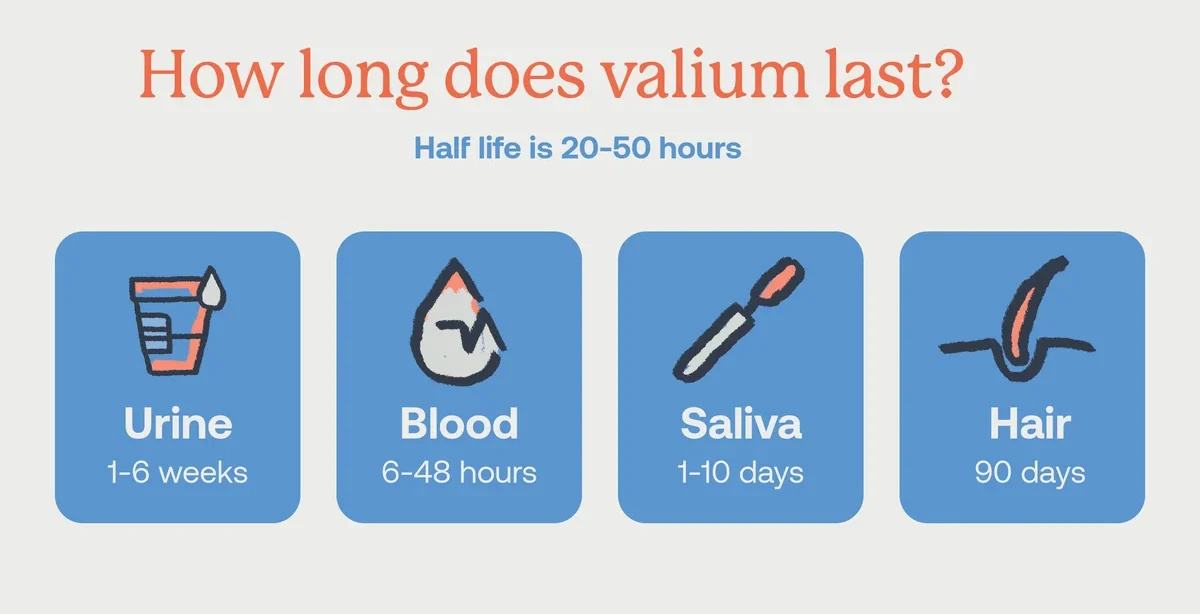
- Detection: Can be found in urine for up to 7 days or longer in chronic users.
What Is Diazepam?
Diazepam is a potent benzodiazepine derivative used primarily for its anxiolytic, sedative, and muscle-relaxant properties. It works by enhancing the activity of gamma-aminobutyric acid (GABA), the brain’s primary inhibitory neurotransmitter. By increasing GABA’s efficiency, diazepam effectively “lowers the volume” on overactive nerve signals in the central nervous system.
Because it is highly lipophilic (fat-soluble), Diazepam is absorbed rapidly by the body, crossing the blood-brain barrier almost immediately after ingestion. This fast-acting nature is why it is a gold standard for emergency seizure control and acute panic management within the Anxiety Medications category.
Conditions It Treats (Causes & Symptoms)
Medical professionals prescribe diazepam to manage a spectrum of symptoms related to CNS overstimulation:
- Generalized Anxiety Disorder (GAD): Chronic, excessive worry and physical restlessness.
- Acute Alcohol Withdrawal: Managing tremors, agitation, and preventing life-threatening seizures.
- Skeletal Muscle Spasms: Relief from tension caused by local trauma or upper motor neuron disorders.
- Pre-operative Sedation: Reducing stress and inducing light amnesia before medical procedures.
- Seizure Disorders: Used as an adjunctive treatment for various types of epilepsy.
How Long Does Diazepam Last
To accurately answer how long does diazepam last, we must differentiate between the subjective “feeling” of the drug and its biological presence. For the average adult, the noticeable effects of a single dose—such as relaxation and reduced anxiety—typically persist for 4 to 6 hours. However, clinical studies from sources like StatPearls indicate that the pharmacological how long does diazepam last can extend beyond 12 hours for many individuals.
The reason how long does diazepam last is so variable is due to its distribution. After the initial effect, the drug moves from the blood into the fat tissues of the body. While this makes the “high” or “calm” feel like it is fading, the drug is still technically active. For specific conditions, the answer changes:
- For Anxiety: Patients often find how long does 5mg diazepam last for anxiety to be roughly 6 hours of peak relief.
- For Sleep: When used for insomnia, the question is how long does diazepam keep you asleep? Most find it provides 7–8 hours of rest, though grogginess the next day is a common sign of its long-reaching half-life.
How Long Does Diazepam Last Based on Half-Life vs Duration of Action
One of the most confusing aspects for patients is the diazepam duration of action vs half life. Duration of action is how long you feel better; half-life is how long it takes your body to eliminate 50% of the substance.
- The Half-Life: Diazepam has a terminal half-life of 24 to 48 hours.
- The Metabolites: As the liver breaks down the drug, it creates a byproduct called nordiazepam, which has a half-life of up to 100 hours.
Because of these long-lasting metabolites, how long does diazepam stay in your system is significantly longer than other benzodiazepines like Xanax or Ativan. It can take up to 3 to 4 weeks for the body to be entirely clear of all diazepam byproducts after the final dose. This long window is a double-edged sword: it prevents “rebound” anxiety between doses but increases the risk of the drug building up to toxic levels if taken too frequently.
Factors That Influence How Long Does Diazepam Last Variations
No two bodies process medication identically. Several physiological factors dictate the answer to how long does diazepam last for you specifically:
- Age and Metabolism: The diazepam half life in elderly patients is significantly prolonged. In younger adults, the half-life might be 20 hours, but it can increase by one hour for every year of age. An 80-year-old may have a half-life of 90 hours.
- Liver Health: Since the liver is the primary “processing plant” for this drug, any hepatic impairment can double or triple how long does diazepam last.
- Body Fat Percentage: Because diazepam is fat-soluble, individuals with higher body fat may store the drug longer, extending how long does diazepam stay in your system.
- Frequency of Use: Chronic users will find that the drug accumulates in their tissues, meaning it takes much longer for the drug to “wear off” compared to a one-time user.
7 Clinical Facts About Diazepam Persistence
- Kick-in Time: Most people want to know how long does it take for diazepam to kick in; for oral tablets, it’s roughly 30 to 60 minutes.
- Peak Concentration: The valium peak effect time usually occurs between 1 and 1.5 hours post-ingestion.
- Anxiety Relief: A standard how long does 5mg diazepam last for anxiety session is typically half a day of reduced worry.
- Muscle Relaxant: The diazepam duration for muscle spasms is often longer than its anxiolytic effect, providing relief for several hours.
- Next-Day Effects: Because of the long half-life, diazepam effects after 24 hours often include mild lethargy or “mental fog.”
- Urine Detection: When asked how long does diazepam stay in your urine, standard tests can detect metabolites for 1 to 7 days.
- Alcohol Interaction: A vital safety rule—can i drink 12 hours after taking diazepam? No. Because the drug is still very active in your system, mixing it with alcohol even 12 hours later can cause severe respiratory depression.
Comparison: Diazepam vs. Short-Acting Benzodiazepines
Understanding how long does diazepam last is easier when compared to “shorter” drugs like Lorazepam (Ativan) or Alprazolam (Xanax).
| Medication | Onset Time | Duration of Effect | Elimination Half-Life |
| Diazepam (Valium) | 15–60 min | 6–12+ Hours | 24–48 Hours (Main) |
| Lorazepam (Ativan) | 30–60 min | 6–8 Hours | 10–20 Hours |
| Alprazolam (Xanax) | 30–60 min | 4–6 Hours | 11–15 Hours |
As the table shows, how long does diazepam last is nearly double or triple that of its counterparts, making it the preferred choice for long-term stabilization but a higher risk for those who need to remain sharp and alert.
Safety & General Usage Information
To use this medication safely, you must be aware of the symptoms of diazepam wearing off. As the peak levels drop, you might feel a return of muscle tension or a slight increase in heart rate. However, because of the long half-life, “rebound” symptoms are usually less severe than with shorter-acting drugs.
If you are using it for muscle issues, the diazepam duration for muscle spasms is quite effective, but you must be careful with dosing. Many ask how often can you take diazepam 2mg? Most prescriptions allow for 2 to 4 doses a day, but taking them too close together can cause the drug to “stack” in your system because how long does diazepam last is so extensive.
Possible Side Effects
While how long does diazepam last is a benefit for symptom control, it also means side effects can linger. Common issues include:
- Prolonged Drowsiness: Feeling sleepy well into the next day.
- Muscle Weakness: A “floppy” feeling that can increase fall risks, especially in the diazepam half life in elderly context.
- Ataxia: Impaired coordination and balance.
- Confusion: Difficulty with short-term memory or processing information.
Who Should Avoid It
Because of how long does diazepam last, certain groups face higher risks:
- Individuals with Sleep Apnea: The sedative effect can worsen breathing pauses.
- Those with Myasthenia Gravis: The muscle-relaxing properties can be dangerous.
- Pregnant or Nursing Women: Diazepam crosses the placenta and enters breast milk easily.
- Heavy Machine Operators: Due to how long does it take for diazepam to wear off, you may be impaired long after you think you are “sober.”
Summary: How Long Does Diazepam Last?
In summary, the answer to how long does diazepam last is multi-layered. While the soothing therapeutic effects may seem to diminish after 6 to 12 hours, the drug remains biologically active for days. Factors like age, liver function, and body mass significantly alter how long does diazepam stay in your system, making it a medication that requires careful, individualized monitoring.
Whether you are trying to understand how long does 5mg diazepam last for anxiety or concerned about valium detection time in urine, the key is to respect the drug’s longevity. Remember, even if you feel the “buzz” has gone, the diazepam effects after 24 hours can still impair your driving or interact dangerously with other substances. For a safe experience, always adhere to the lowest effective dose for the shortest possible duration. Ultimately, the question isn’t just how long does diazepam last, but how long you remain under its subtle, long-term influence.
Making an Informed Choice for Your Health
Deciding to use a long-acting medication like diazepam is a significant step toward managing your wellness, but it must be done with complete information. Understanding the mechanics of how long does diazepam last allows you to plan your days safely and avoid the pitfalls of accidental over-sedation. If you are ready to take the next step in your treatment plan under professional guidance, you can visit our comprehensive Shop to explore options and resources designed to support your recovery and peace of mind.
FAQ: How Long Does Diazepam Last?
How long does it take for diazepam to wear off completely?
While you stop feeling “calm” after about 12 hours, it takes the body roughly 10 days to 3 weeks to clear all metabolites. This is why how long does diazepam last is considered “long-acting.”
Can I drink 12 hours after taking diazepam?
It is highly recommended to avoid alcohol for at least 48 to 72 hours after your last dose. Because how long does diazepam stay in your system is so long, the risk of a fatal interaction remains high even half a day later.
How long does diazepam stay in your urine for a drug test?
In most standard screenings, how long does diazepam stay in your urine ranges from 1 to 7 days, though heavy users may test positive for up to 30 days.
How to make diazepam last longer?
You cannot safely how to make diazepam last longer through home hacks. Dosing with food can actually delay the valium peak effect time, making it feel like it lasts longer but reducing the initial strength.
How long does 5mg diazepam last for anxiety compared to 2mg?
The dose doesn’t change the half-life, but a 5mg dose will provide a more intense therapeutic effect for a slightly longer perceived window (up to 12 hours) than a 2mg dose.
Medical Disclaimer
This content is for informational purposes only and does not constitute medical advice. Diazepam (Valium) is a Schedule IV controlled substance with a high risk for dependence and addiction. Always consult a qualified healthcare provider before starting or stopping any medication. If you suspect an overdose or are experiencing a medical emergency, contact your local emergency services (such as 911 or 111) immediately. For further clinical information, refer to official resources like the FDA or the Mayo Clinic.